
What I Know About Home Birth — From Both Sides of the Camera
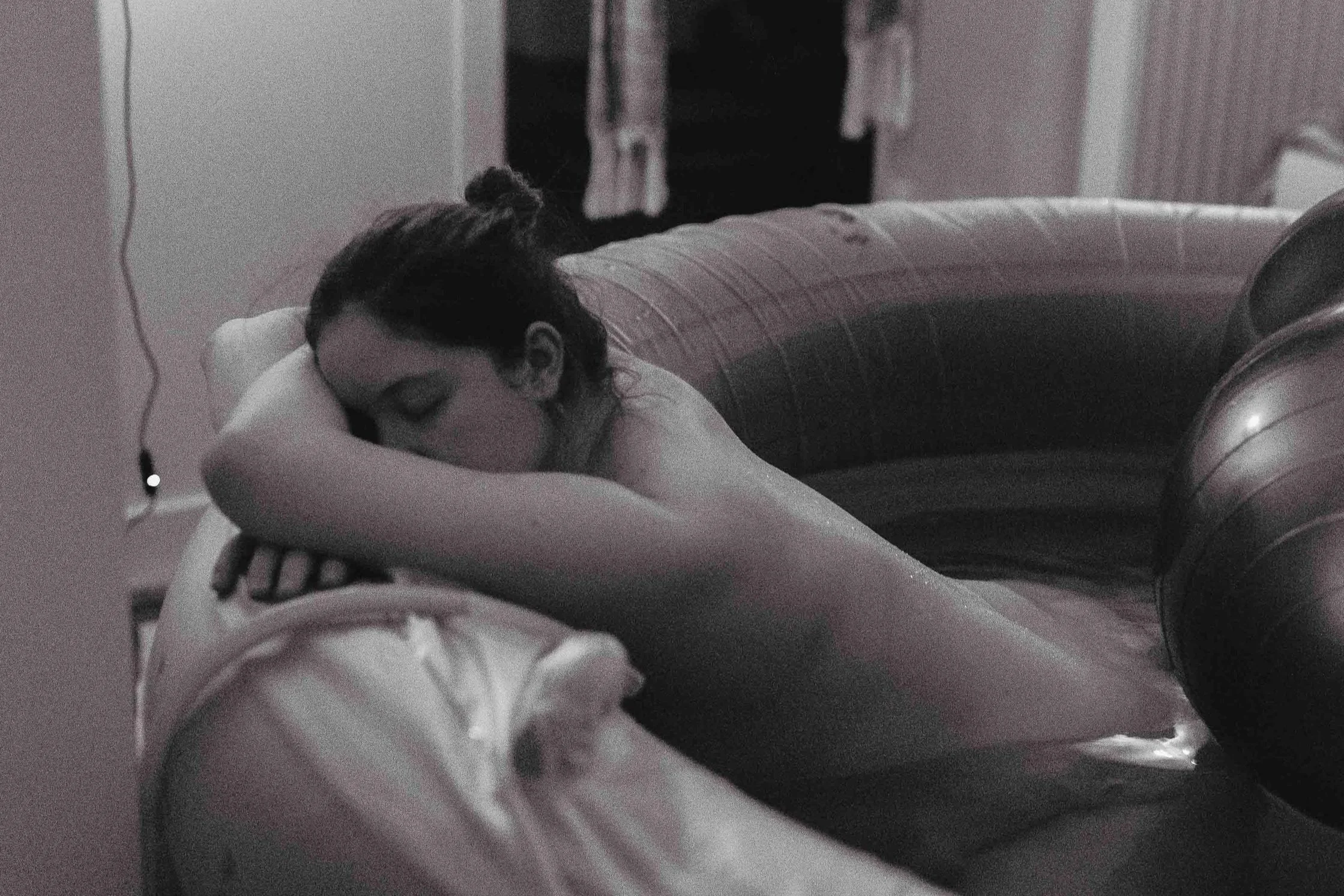
I decided, long before I knew anything about photography, that I would never give birth in a hospital. Years later, I found myself on the other side of that decision — photographing someone else's home birth, feeling every hour of it with her.
I was twenty-two. It was the late nineties, and where I lived, there were no antenatal classes, no birth preparation courses, none of the structure that exists now to walk a first-time mother through what's coming. There was just a decision I made early on: I would not give birth in a hospital.
So I did the only thing I knew how to do. I bought a book on birth and read it properly — not skimming, but studying it the way you study something that frightens you a little. By the time the day came, I felt like I already knew what was happening to me, even though it was my first time and I was so young.
The birth itself was easy. My husband was beside me the whole time, and I remember the strangest, funniest detail more clearly than almost anything else: we had spent the entire pregnancy certain we were having a boy. We even had the name picked out. So when she finally arrived and he lifted her up, there was this beat of pure confusion before we both realised — it's a girl. We laughed. After everything, that was the moment that broke the tension completely.
I think that experience shaped how I photograph birth more than anything I've learned since.
Photographing someone else's home birth
Years later, I found myself in a client's home for a birth that was nothing like a quick story. It was long. Hours and hours of it. And unlike a hospital, where you might have some control over light, here I worked with whatever was actually in the room — no setup, no adjustments, because the only thing that mattered was that the mother felt comfortable, not watched.
I made myself as invisible as I could. I didn't direct, didn't ask anyone to move or pause. I just stayed close and quiet and ready.
What I didn't expect was how much I would feel. I had been through this myself, so every stage of it landed somewhere in me — I wasn't just observing, I was recognising. That made it harder in a way I hadn't anticipated, but it also meant I understood exactly what mattered enough to capture and what didn't. Because the day was long, I had time to see so much: the early hours, the shift into harder labour, and finally the moment everyone in the room had been waiting for.
Why I still believe in this work
A home birth has no schedule I can plan around and no lighting I can control. It asks a photographer to disappear into the background and to trust that the story will tell itself, in its own time, exactly as it happened.
That's the only kind of birth photography I know how to do, really — because it's the only kind I've ever lived through myself.
If you're planning a home birth in London and want it photographed honestly, without posing or performance, I'd love to talk about it.
If you're planning a home birth in London and are looking for a home birth photographer who won't pose or direct you — just watch closely and stay out of the way — I'd love to talk about it.
That's the only kind of birth photography I know how to do — without posing, without direction, just watching closely. I've written more about what that actually means here: What "Natural" Actually Means When I'm Photographing a Birth →
What I Know About Caesarean Birth — From Both Sides of the Camera
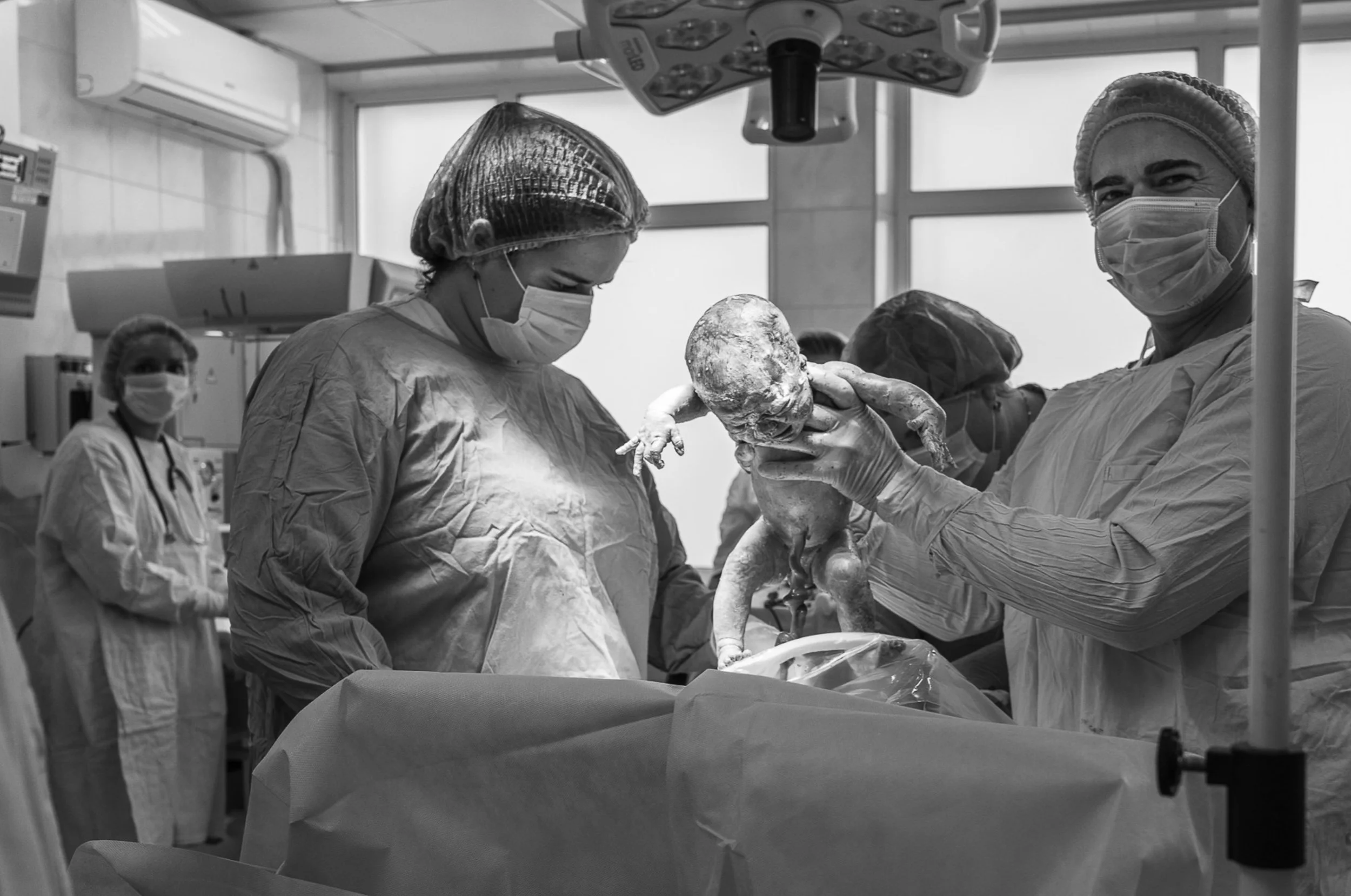
I had a caesarean myself, and years later photographed my daughter's emergency caesarean too. Here's what I know about recovery — and what changes when I photograph it.
I had a caesarean myself.
I remember the specific kind of pain that nobody quite prepares you for — not the operation itself, but the days after. Standing up. Lying down. Anything that asked anything of my stomach muscles. I had been someone who trained, who moved through the world easily, and suddenly I couldn't sit up without thinking about it first.
My scar healed slowly. For a long time there was no feeling there at all. My husband talked me into trying leeches, of all things — and somehow, it helped. I still don't fully understand why. I just know that I needed something, and that was the thing that worked.
I tell you this because when I photograph a mother recovering from a caesarean, I am not guessing at what she's going through. I know it.
Years later, I was on the other side of it in a different way.
My daughter was in labour for three days. A home birth that became, in the end, an unplanned caesarean — her baby was simply too big. I didn't sleep for those three days. I have the data on my watch to prove it, which still makes me laugh a little.
I was there when they brought her and my grandson back from theatre. I heard his first cry. I photographed him, and the feeding, and her, and her husband — not a single pose, nothing arranged. Just the tenderness. The relief. The tears that come after something that hard is finally over.
I stayed with her for several weeks afterward.
So when I photograph a newborn session for a mother who has had a caesarean, here is what changes:
I bring the pillows. I roll the blankets into the right shapes before she even has to ask. I find the positions that don't ask anything of her stomach — propped against the headboard, baby resting high on her chest, nothing that requires reaching or twisting or holding her own weight in a particular way.
I move slowly, and I let her move slower.
There is no part of the session where I need her to lie a certain way for the photograph. The photograph adjusts to her — never the other way round.
Recovery from a caesarean is real, physical, and it takes longer than anyone tells you it will. If you're in those first weeks and thinking about a newborn session, I'd love to talk it through with you — what's comfortable, what isn't, and how we make it work for exactly where you are.
This experience also shaped how I approach every birth I photograph — not just caesareans. I've written more about that philosophy here: What "Natural" Actually Means When I'm Photographing a Birth” →
If you're considering birth photography in London, here's what to expect →
Get in touch or see the collections.