
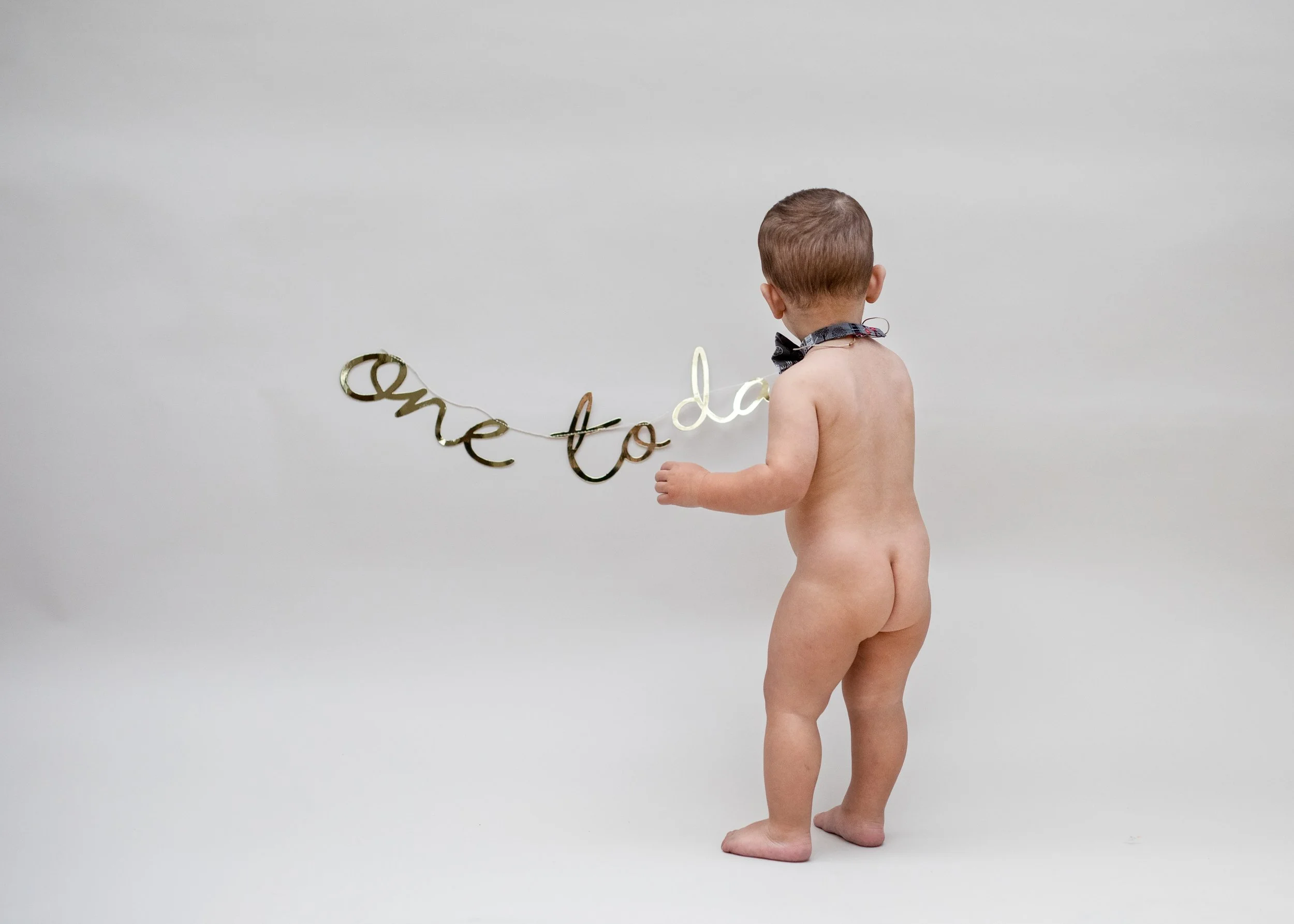
Here's Our Baby At Six Months. Here's Him At One. Look How Much He Changed.
Children change so quickly we barely notice it happening — until we look back. A milestone session is a way of stopping time on purpose, before the details blur into memory alone.
Children change so quickly.
In the middle of everything else — the feeding schedules, the sleepless nights, the sheer busyness of raising a small person — we don't really notice it happening. Their face shifts, week by week, in ways too gradual to catch in the moment. And then one day you look at a six-month photo and you almost don't recognise the baby you're holding now.
This is what a milestone session does, really. It stops time on purpose.
Here's our baby at six months. Here's him at one — look how much he's changed. Here he is at eighteen months, right after his first haircut. Without a photograph, all of that softens into a kind of blur. You remember that he changed, but not quite how, not quite when. The photograph holds what memory alone can't.
I think of it almost like a diary for a child — one you could genuinely tuck these images into, alongside the notes about first words and first steps. Years from now, you won't just remember that your baby grew. You'll be able to see it, stage by stage, and feel something close to disbelief at how fast it went.
I know it's tempting to think a phone camera does the job well enough. And in a sense, it can — for the everyday moments, the quick smile across the kitchen. There are even clever tools now that can dress up a phone photo into something that looks polished. But none of that replaces what a proper session gives you: real studio-quality light, the patience to actually get everyone looking the same direction at the same time, and — for cake smash sessions especially — a genuinely joyful, engineered moment that doesn't happen by accident.
Because that's the other thing about ordinary life with small children: it doesn't hand you many truly special moments on its own. Most days are just days. A cake smash session is one of the rare times you get to manufacture pure, uncomplicated delight — icing everywhere, a baby completely unbothered by mess, a room full of adults laughing — and have it properly documented, not just half-caught on someone's phone mid-chaos.
That's really what a milestone session is for. Not just a nice photo. A way of making sure that when you look back — and you will look back, more than you can imagine right now — there's something real there to see.
If this is the year you start marking the stages — six months, one year, eighteen months, or just a cake smash to celebrate the first birthday — I'd love to help you hold onto it properly. You can see how my milestone sessions work here →
Get In The Photo. Your Children Don't Care How You Look.
I have almost no photographs of myself with my own children. My children have told me this makes them sad. Here's what that taught me about the mothers and grandmothers who try to stay out of the frame — and why I always try to talk them back in.
I have almost no photographs of myself with my own children.
It's a strange thing to admit, for someone whose whole life is photography. I have thousands of images of other people's families — but when I go looking for pictures of me with mine, there's almost nothing. I was always the one behind the camera. Always the one saying "one more" to everyone else, never stepping in front to be part of it myself.
My children have told me this makes them sad. And they're right to feel that way. One day, a photograph of me — however I looked that day, whatever I was wearing, whether my hair was done — will be the only version of me they have left to hold onto.
I understand this from the other direction too. My own grandmother, and her mother before her, died before I had the chance to know them properly. What I have of them is a handful of old photographs my parents kept — creased, faded, some barely in focus. I am endlessly grateful those photographs exist at all. They're not just images. They're the only proof I have that these women were real, that I come from somewhere, that a whole life happened before mine did.
This is why, on almost every family session I photograph, I try to talk someone into the frame who doesn't want to be there.
It's nearly always a woman. A mother, a grandmother. "Not today," she'll say. "I look tired." "I haven't done my hair." "Just get the kids — I'll be in the next one." I understand this instinct completely — I've felt it myself, plenty of times, on the other side of my own camera. There's something deeply uncomfortable about being looked at when you don't feel your best.
But here's what I've learned, watching hundreds of families over eighteen years: the children don't see any of that. They don't notice the wrinkles you're worried about, or the concealer you didn't have time to apply, or the ten pounds you wish weren't there. None of it registers to them. What they see is their mother. Their grandmother. The person whose face they love more than any other face in the world, exactly as she is.
So I keep asking. Gently, but I keep asking. And almost every time, when someone finally steps in — reluctantly, still a little unsure — something shifts in the room. I've watched a grandmother go from arms crossed at the edge of the garden to laughing in the middle of a pile of grandchildren within a few minutes. I've watched mothers who spent the whole session directing everyone else finally sit down and let themselves be photographed too, and cry a little when they saw the images afterwards.
That photograph — the one that almost didn't happen — is very often the one a family tells me they love most.
If you're a mother, a grandmother, the one who always takes the pictures and never appears in them: I'd love to help change that, even just once. Not a perfectly posed, everyone-looking-at-the-camera kind of photograph, necessarily — just a real one, of your family, with you actually in it. Your children won't remember how you looked that day. They'll just be grateful you were there.
my family portrait sessions →
If this is the year you finally get in the photo — whether it's a full family session, or just you and your children, or three generations together — I'd love to talk it through. You can see how my sessions work and what's included here →
The Photograph I Always Want to Take
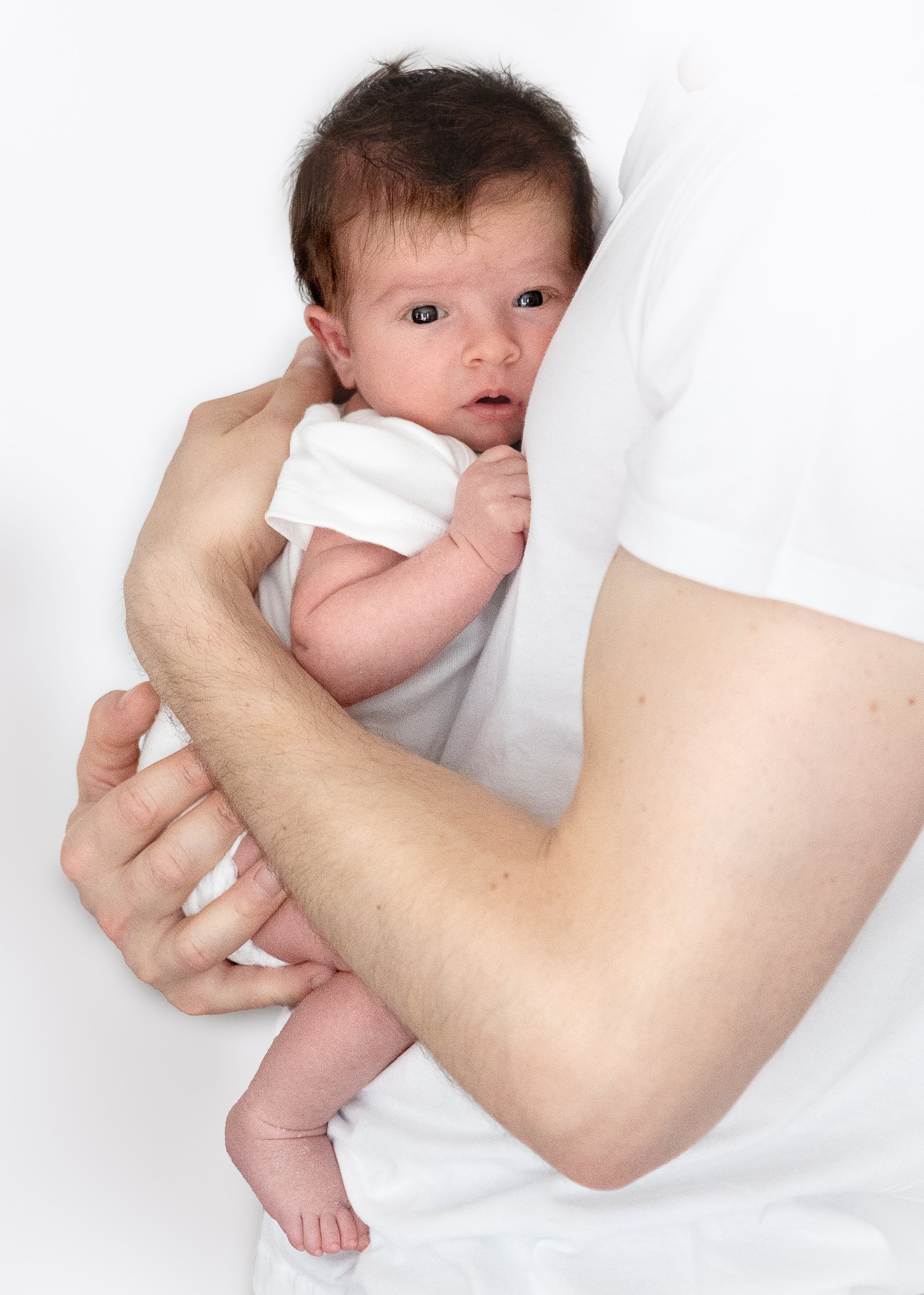
In those first days at home, there is nothing more important than the person beside her. Not always words. Sometimes just a look.
There is one photograph I always want to take during a newborn session.
Not the baby curled and sleeping.
Not the mother gazing down.
The hands.
A father's hands holding a newborn — enormous and careful and completely certain — while everything else in the room is uncertain.
Those first days at home with a new baby are unlike anything else.
A new mother who doesn't yet know what to do with this small person she has been handed.
Who is exhausted in a way she has never been exhausted before.
Who hasn't slept.
Who worries.
Who wants, more than anything, to be the best mother she can possibly be.
Whose body hurts.
Whose whole self is rearranging.
Who sometimes feels completely alone in the universe — even in a room full of people.
Whose own parents may be far away.
Who has only just stopped being someone's child herself — and is now responsible for another life entirely.
In those moments, there is nothing more important than the person beside her.
Not always words.
Sometimes just a look.
A steadiness.
An energy that says: I've got you. We've got this.
That is enough to move mountains.
And when I photograph a father holding his newborn — those huge hands, that quiet certainty — I am photographing that too.
The thing that doesn't always get said.
But that makes everything possible.
If you're expecting a baby and thinking about a newborn session in London or Bromley, I'd love to hear from you. See full collections at investment or get in touch.
What I Know About Caesarean Birth — From Both Sides of the Camera
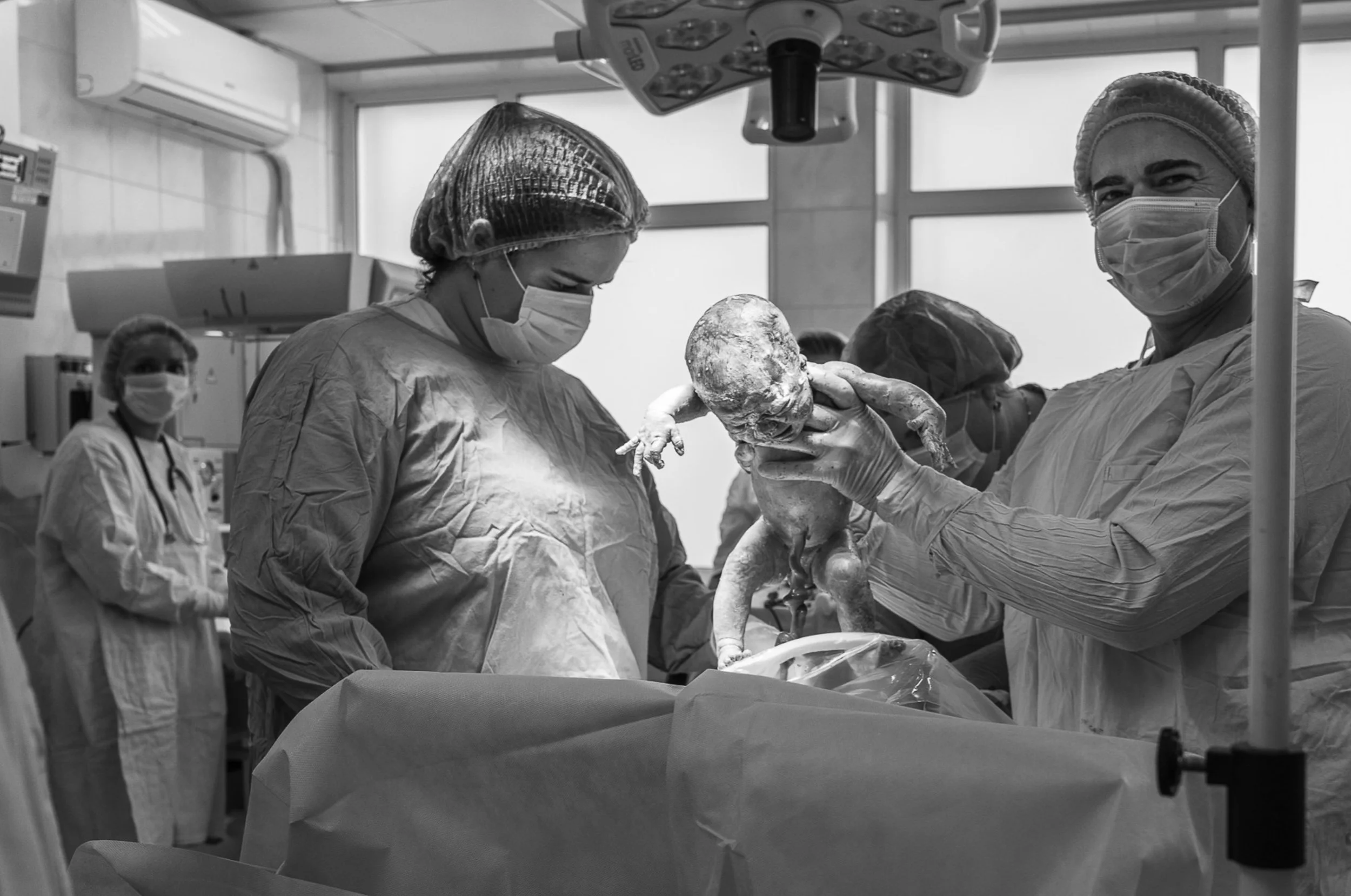
I had a caesarean myself, and years later photographed my daughter's emergency caesarean too. Here's what I know about recovery — and what changes when I photograph it.
I had a caesarean myself.
I remember the specific kind of pain that nobody quite prepares you for — not the operation itself, but the days after. Standing up. Lying down. Anything that asked anything of my stomach muscles. I had been someone who trained, who moved through the world easily, and suddenly I couldn't sit up without thinking about it first.
My scar healed slowly. For a long time there was no feeling there at all. My husband talked me into trying leeches, of all things — and somehow, it helped. I still don't fully understand why. I just know that I needed something, and that was the thing that worked.
I tell you this because when I photograph a mother recovering from a caesarean, I am not guessing at what she's going through. I know it.
Years later, I was on the other side of it in a different way.
My daughter was in labour for three days. A home birth that became, in the end, an unplanned caesarean — her baby was simply too big. I didn't sleep for those three days. I have the data on my watch to prove it, which still makes me laugh a little.
I was there when they brought her and my grandson back from theatre. I heard his first cry. I photographed him, and the feeding, and her, and her husband — not a single pose, nothing arranged. Just the tenderness. The relief. The tears that come after something that hard is finally over.
I stayed with her for several weeks afterward.
So when I photograph a newborn session for a mother who has had a caesarean, here is what changes:
I bring the pillows. I roll the blankets into the right shapes before she even has to ask. I find the positions that don't ask anything of her stomach — propped against the headboard, baby resting high on her chest, nothing that requires reaching or twisting or holding her own weight in a particular way.
I move slowly, and I let her move slower.
There is no part of the session where I need her to lie a certain way for the photograph. The photograph adjusts to her — never the other way round.
Recovery from a caesarean is real, physical, and it takes longer than anyone tells you it will. If you're in those first weeks and thinking about a newborn session, I'd love to talk it through with you — what's comfortable, what isn't, and how we make it work for exactly where you are.
This experience also shaped how I approach every birth I photograph — not just caesareans. I've written more about that philosophy here: What "Natural" Actually Means When I'm Photographing a Birth” →
If you're considering birth photography in London, here's what to expect →
Get in touch or see the collections.
What to Expect from a Newborn Session in Bromley
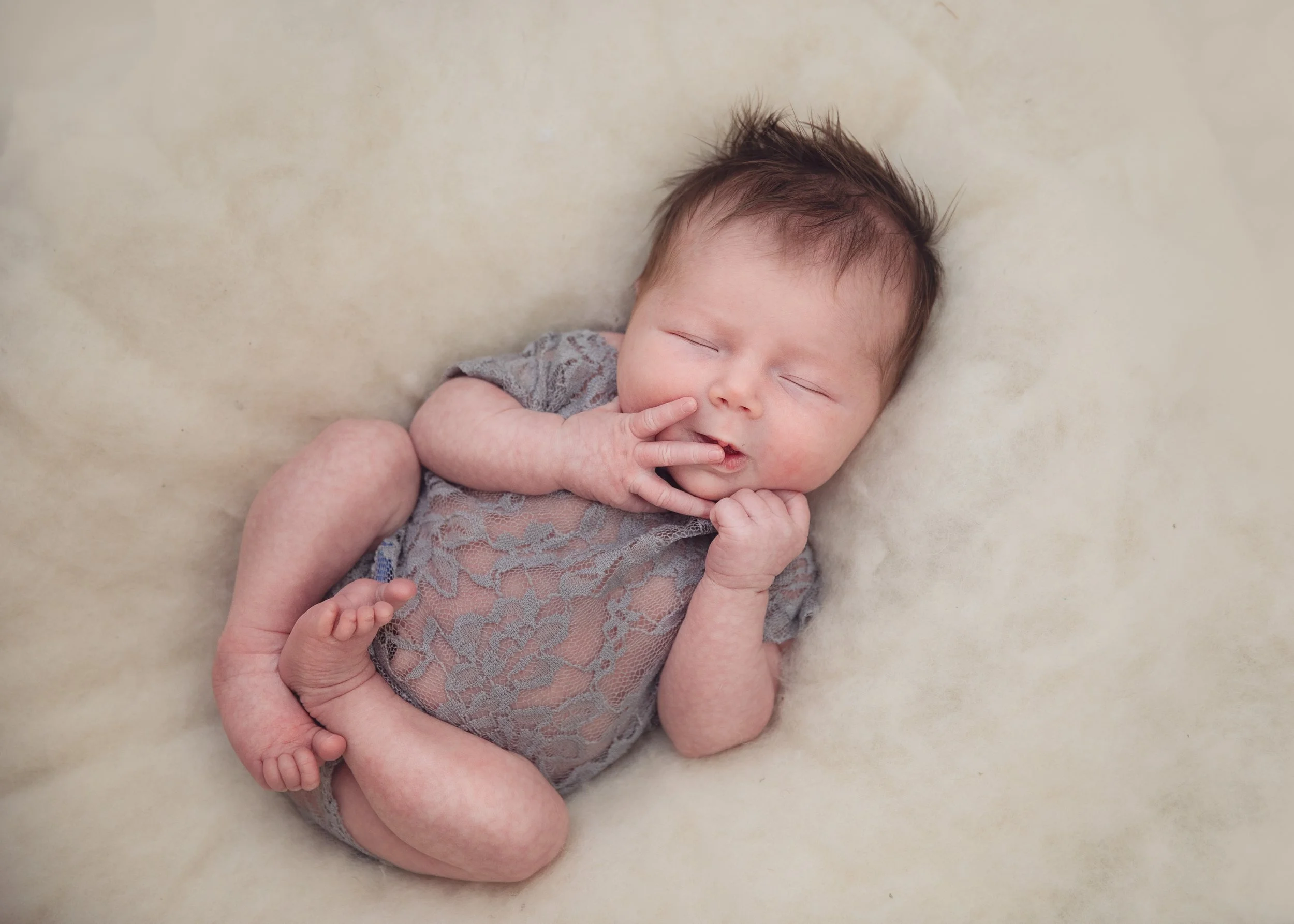
Wondering what happens during a newborn photography session in Bromley? Kate See explains everything — from timing and preparation to what the day actually looks like.
If you've never had a newborn session before, it's completely normal to wonder what actually happens. Here's an honest account of what a session with me looks like — from the moment I arrive at your door to the sneak peek you'll receive that evening.
When to book
Most families book during their second trimester, and we hold a flexible date around five to ten days after your due date. That window — the first one to six weeks — is when babies sleep most deeply and curl most naturally. Earlier is gentler, but every baby finds their own timing. I've photographed many babies up to six weeks old, and the images are always beautiful.
The morning of your session
You don't need to prepare much. A room with a window — south or east-facing is ideal, but any daylight will do. A slightly warmer room than usual, because your baby will be undressed for some of the session. A feed about thirty minutes before I arrive, if the rhythm allows.
That's genuinely it.
I arrive quietly, usually with everything loaded into two bags. I find the right corner of the room, set up while you settle the baby, and we begin when your baby is ready — not when the clock says so.
What I bring
Everything. After eighteen years of newborn sessions across Bromley and South East London, my entire studio comes with me.
Organic wraps in cream, oatmeal, sand, and soft grey. Knitted gowns, bonnets, and rompers. Delicate headbands. Wooden bowls, baskets, and neutral backdrops. A heated beanbag for posing. Studio-quality lighting for darker days. Warm hands and hand sanitiser.
You don't need to buy props, outfits, or anything at all for your baby. If there's something meaningful you'd like to include — a blanket from a grandmother, a tiny outfit that belonged to an older sibling — bring it. Those pieces often become the most treasured images of the day.
The session itself
A newborn session usually takes two to three hours. We work entirely at your baby's pace. If they need to feed, we feed. If they need a long settle, we wait. If a pose isn't working, we move on. There's no timeline and no pressure.
Most of the session is quiet. You're welcome to stay close, make tea, or rest in another room — whichever feels right. Parents are never far from the baby. Every pose that looks unsupported in the final image is fully supported during the session, often by a parent's hand just outside the frame.
Toward the end, I photograph the family together — you holding your baby, siblings if they're there, both parents in the frame. These are often the images families return to most.
After the session
That same evening, or the next morning, I'll send a sneak peek — one or two of my favourite images while the feeling of the day is still fresh.
Your full private gallery arrives within one week. It includes colour and black and white edits, a print release for personal use, and a password-protected link you can share with family.
A note on safety
I am trained in newborn safety and fully insured. Every session I photograph in Bromley and across South East London is treated with the same care I gave my own five children in those early weeks. Your baby is never not held.
Thinking about booking a newborn session in Bromley or South East London? I'd love to hear from you. You can see full pricing and collections on my investment page, or simply get in touch.
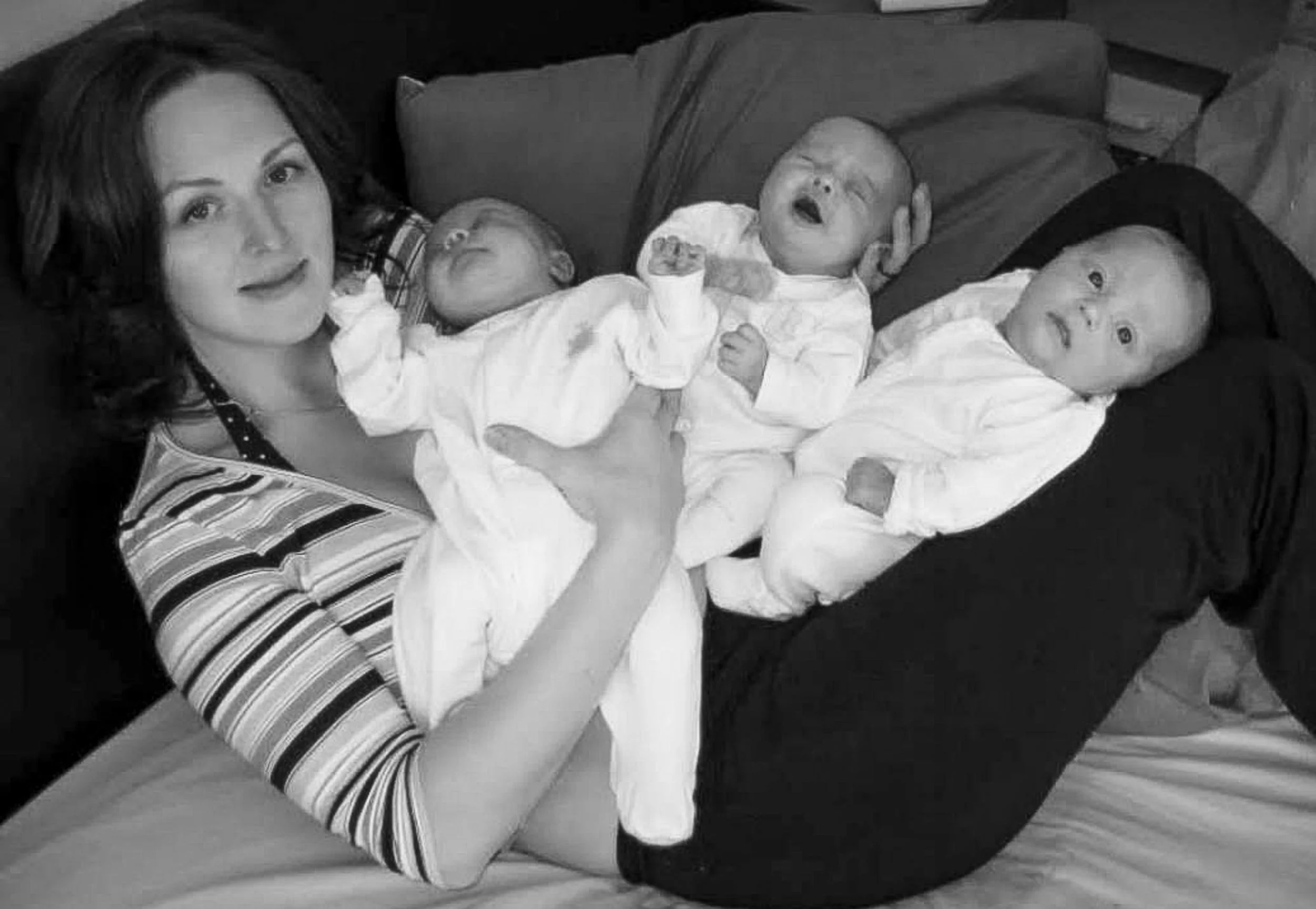
I Once Said I Wanted Five Children
I thought two children were enough. Then I had triplets.
Sometimes I think it’s a very strange question — and at the same time, a very important one.
Why do we actually want children?
When I was little, my mum once asked me:
“Kate, how many children do you want?”
And I answered:
“Five.”
To this day I have no idea where that number came from. Nobody in my family had lots of children. Maybe some distant great-grandmothers, but that’s about it.
Then I had two children and honestly thought:
“That’s it. Absolutely enough. No more.”
A few years later, I suddenly wanted another baby.
And instead, I had triplets.
I still remember my mum laughing:
“Well… dreams do come true. You wanted five.”
When I photograph newborns now, parents often imagine that newborn photographers must have beautifully documented every second of their own children’s lives.
Perfect little albums.
Perfect sleepy portraits.
Perfect memories carefully preserved from day one.
But my own children sometimes ask me:
“Mum, you’re literally a photographer… why do we barely have any photos from when we were babies?”
And I always answer honestly:
Because I was exhausted.
Completely exhausted.
When you have small children — especially several at once — sometimes you are not creating memories.
Sometimes you are simply surviving between feeds, laundry, tiny socks, sleepless nights, and cold coffee you forgot to drink.
And honestly, that is one of the reasons I love in-home newborn sessions so much.
Because you do not need to pack bags.
You do not need to drive anywhere.
You do not need to pretend you are functioning perfectly.
Sometimes parents simply hand me the baby… and go back to sleep.
I’m not joking.
And I completely understand it.
Maybe that’s also why these photographs matter so much.
Not because life looks perfect in them.
But because one day the whole period starts feeling almost unreal.
Like some strange beautiful fog you lived through half-asleep.
Tiny fingers.
Milk bottles at 3am.
Warm sleepy weight on your chest.
The sound of breathing next to you in the dark.
You are unbelievably tired.
And somehow, at the very same time, deeply happy.
So why do we have children?
Maybe to live a bigger life than the one we could live alone.
Maybe to watch another human becoming themselves right in front of you.
Maybe to heal things quietly without even noticing.
Maybe to experience a kind of love that completely rearranges your understanding of time, fear, exhaustion, and joy.
Or maybe simply to lie there one day, surrounded by your children, and suddenly realise:
this is life.